
Since 2014
Ten Years of Reliability Your Trusted Partner
Ten Years of Reliability Your Trusted Partner
Chapter 1: What is a Chemical Tanker Trailer?
Chapter 2: How Is Chemical Tanker Trailer Heated?
Chapter 3: Advantage of Chemical Tanker Trailer
Chapter 4: How Many Litres is a Chemical Tanker Trailer?
Chemical tanker trailers use diesel burners to heat or insulate asphalt during transportation. Automatically heats asphalt and keeps it warm.
Chemical tanker trailers use organic heat transfer agents for heat transfer. Large industries and factories use the chemical tanker trailer to transport large quantities of asphalt easily and quickly. Chemical tanker semi trailers have 2 to 4 axes with different tank designs. Chemical tanker trailers are designed according to different steel materials and required thicknesses. Chemical tanker trailers are ideal for transporting asphalt.
Chemical tanker semi trailers are primarily used to heat asphalt to make it usable once it reaches its destination. A stable temperature must be maintained inside chemical tanker trailers to keep the characteristics and performance of the asphalt intact for better customer convenience. The storage tanks use thermal oil pumps to circulate heat to maintain the different sets of bitumen temperatures.
Heat time is another important thing to check. If the chemical heating time is too long and the temperature is too high, the quality of the asphalt will decrease. This affects the performance and usability of the asphalt, so Chemical tanker trailers are required to continuously stabilize the temperature. Above 180°C, bitumen begins to decompose.
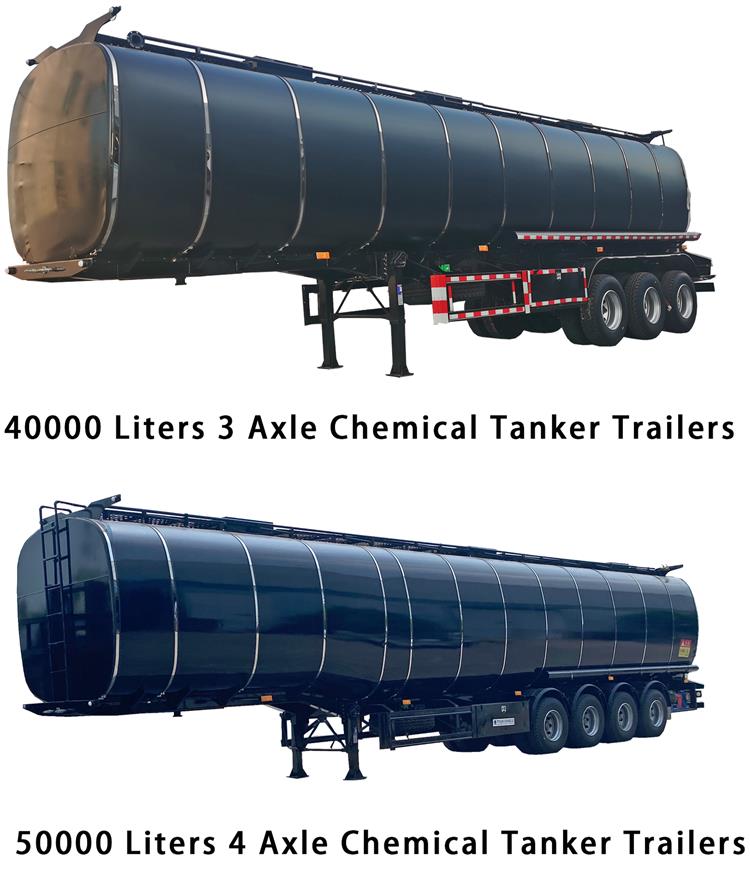 What is a Chemical Tanker Trailer?
A chemical tanker trailer carrying asphalt is usually fitted with a heating unit. Once the spin cycle starts, it is important to maintain this temperature. Once the tank water level thermometer is lower than position, the suction valve will be closed and the water will not flow back due to heating.
The exhaust on the heating tank is opened through a valve to allow the asphalt to enter the heater smoothly. Before ignition, the water tank is filled with water. Once the water is full, the valve opens and once the desired height is reached, the valve closes. The chemical tanker trailer has water inside and if it contains colored binders, the temperature at the top should be 100 degrees.
During the heating process, the operator should follow the instructions of the pump and thermometer, and proceed on time and safely. The operation of chemical tanker trailer should follow relevant principles. When the temperature inside the Chemical tanker trailer is too high, internal circulation cooling should be started immediately to maintain the appropriate temperature.
The insulation materials used in the chemical tanker trailer are rock mineral wool and polyurethane. Pipes are placed at the bottom of the tank for heating. This design results in different heat loss rates from various parts of chemical tanker trailers. Heating methods include coal, steam and diesel burners.
Heating methods include coal, steam, and diesel burners. Liquid bitumen is transported at higher temperatures of approximately 250°C. Although specialized means are used to support such temperatures, all tanks are insulated to ensure that heat cannot escape. Bitumen undergoes complex expansion during transportation at high temperatures. Tank heating systems can account for this difference to maintain the quality of the asphalt.
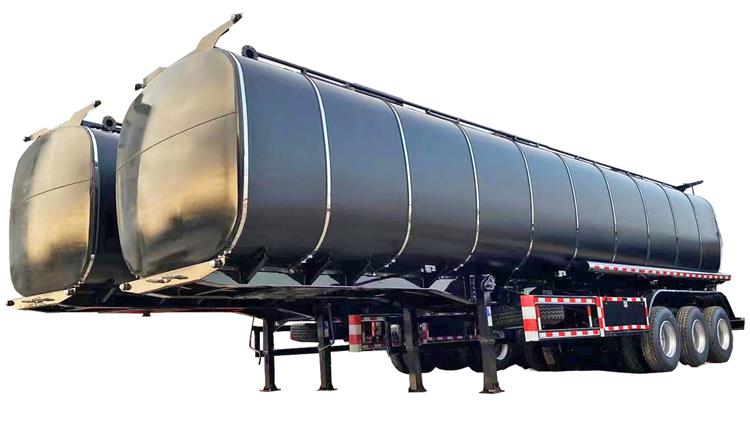 How Is Chemical Tanker Trailer Heated?
1. High loading, unloading and transportation efficiency. Transporting goods through a Chemical tanker trailer for sale facilitates centralized loading and unloading, shortens vehicle downtime caused by cargo loading and unloading, and improves transportation efficiency.
2. Protect the goods. Chemical tanker trailers for sale are generally airtight containers. During transportation, the goods are less affected by the outside world and are not prone to contamination, leakage or deterioration.
3. Cargo safety is high. Especially when transporting some explosive, flammable, toxic or corrosive goods, Chemical tanker trailer for sale transportation can greatly reduce the occurrence of accidents and improve the safety of transportation, loading and unloading.
4. Save packaging materials. Chemical tanker trailer for sale does not require packaging of goods, which can save packaging materials and expenses and reduce transportation costs;
5. Reduce labor intensity. Chemical tanker trailer for sale transportation, loading and unloading are highly mechanized, do not require multiple loading and unloading, and do not require excessive human participation, which can greatly reduce labor consumption.
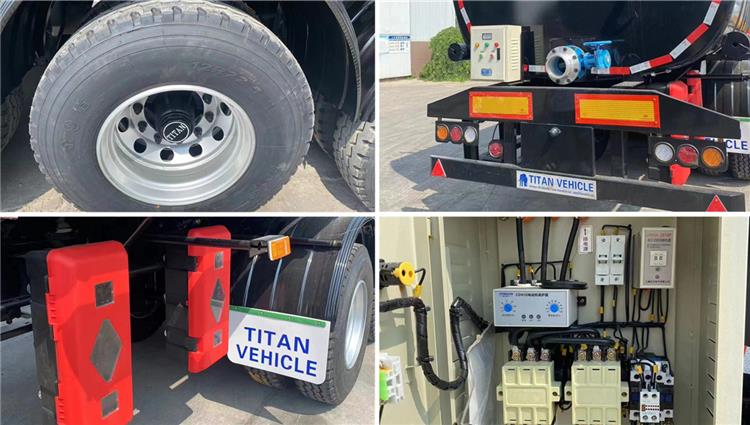
Advantage of Chemical Tanker Trailer
The capacity of a chemical tanker trailer can vary based on specific design and needs. Typically, the capacity of a chemical tanker trailer is expressed in liters (L) or cubic meters (m³).
The capacity of a chemical tanker trailer depends on factors such as the type of chemical, density, and transportation needs. Different types of chemical tanker trailers have different capacities ranging from thousands to tens of thousands of liters.
Small Chemical tanker trailer: Capacity usually ranges from a few thousand liters to 10,000 liters. Mainly used to transport some small batches of chemical raw materials.
Medium-sized Chemical tanker trailer: Capacity usually ranges from 10,000 liters to tens of thousands of liters. Suitable for medium and short distance transportation of a variety of commonly used raw materials chemicals.
Large Chemical tanker trailer: The capacity usually exceeds tens of thousands of liters and can even reach hundreds of thousands of liters. It is also used for long-distance transportation of some important raw materials that are in high demand. For long-distance bulk transport tasks of bulk chemicals.
It should be noted that the specific capacity can also be designed and manufactured according to customer customization requirements. They will be able to provide suitable Chemical tanker trailer capacity options and technical parameters based on your needs.
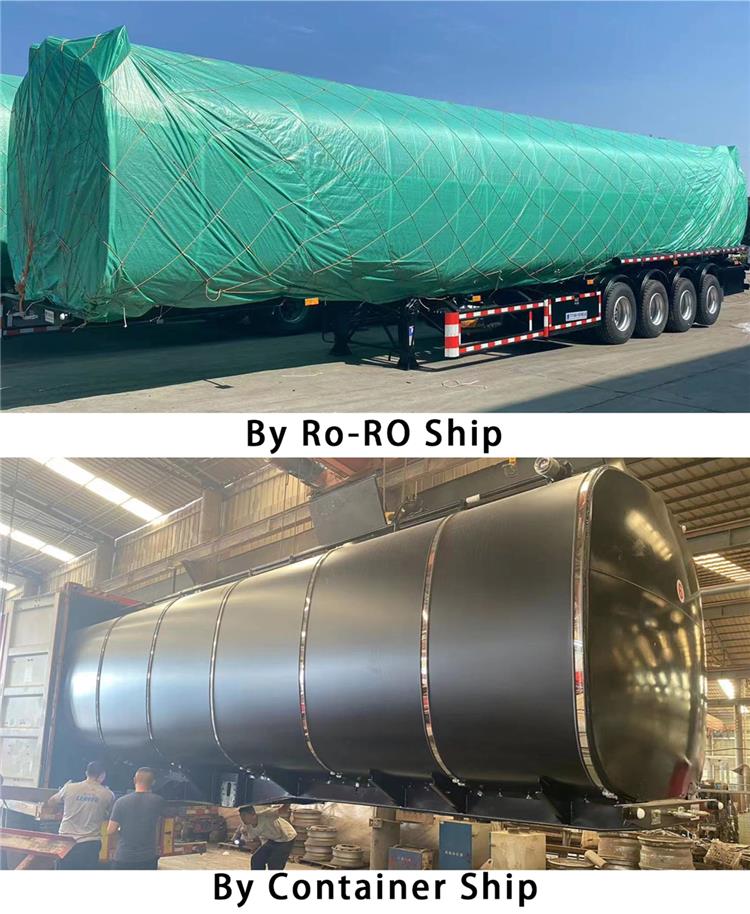 How Many Litres is a Chemical Tanker Trailer?
Shandong TITAN Vehicle Co., Ltd.
Wehcat/Whatsapp: +86 18660159635

BOSS WeChat

Boss Whatsapp