
Since 2014
Ten Years of Reliability Your Trusted Partner
Ten Years of Reliability Your Trusted Partner
Transporting liquid, dry bulk, and hazardous cargo is one of the most technical and highly regulated segments in the freight and logistics industry. Unlike general palletized cargo or containerized goods, bulk liquid and powder materials cannot be transported safely with standard flatbed trailers or ordinary cargo boxes. These special commodities require fully sealed tank structures, professional internal engineering systems, corrosion-resistant materials, temperature control functions, and complete safety protection devices to prevent leakage, spillage, material contamination, dust pollution, and road traffic accidents. For logistics companies, fleet owners, construction contractors, and industrial material suppliers, selecting the correct type of tanker semi trailer directly determines transportation safety, operational efficiency, compliance with local traffic laws, and long-term fleet profitability.
At TITAN Vehicle, we focus on the R&D, structural optimization, and standardized manufacturing of high-performance tanker semi trailers. Our complete product lineup covers four mainstream professional models: fuel tanker trailers for flammable liquid transport, cement and dry bulk powder tankers for construction materials, heat-insulated asphalt tankers for road engineering projects, and anti-corrosion chemical tankers for hazardous corrosive liquids. Every tanker we produce undergoes strict structural simulation testing, premium material selection, automated welding processing, and full-pressure leakage inspection, ensuring stable performance, long service life, and full adaptability to complex global road conditions and regional transportation regulations.
This comprehensive guide elaborates on the definition, working principles, material advantages, core configurations, and capacity specifications of each tanker type with clear hierarchical subheadings. It also summarizes the professional manufacturing strengths of TITAN tanker trailers and answers the most frequently asked questions from global trailer buyers, helping you quickly determine the most suitable tanker configuration for your daily transport business.
1. Fuel Tanker Semi Trailers
1.1 Overview & Main Transport Scenarios
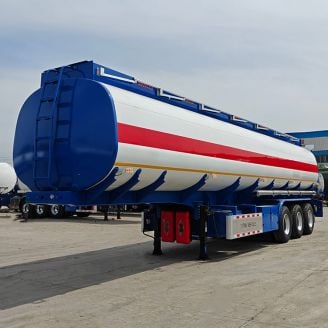
Fuel tanker semi trailers are specially designed sealed liquid transport vehicles dedicated to flammable oil products. They are the most widely used tanker equipment in energy logistics and oil distribution industries. This type of tanker is mainly used for bulk transportation and short-distance distribution of gasoline, diesel, kerosene, crude oil, and other petrochemical liquid fuels. Common application scenarios include oil depot outbound transportation, intercity long-distance fuel logistics, gas station daily replenishment, mining field crude oil transportation, and engineering fleet fuel supply. Different from ordinary liquid tankers, fuel tankers adopt anti-static design, internal anti-surge baffles, and explosion-proof structural standards to eliminate safety risks caused by liquid shaking, static accumulation, and emergency braking during high-speed driving.
1.2 Optional Tank Body Materials
To meet different customer budgets, road limit requirements, and long-term operating needs, TITAN provides three mature and reliable tank material solutions. Carbon steel is the most cost-effective option, featuring high overall rigidity, strong impact resistance, and excellent structural stability. It is suitable for heavy-duty, high-frequency, and complex road transport environments, favored by large fleets with large shipment volume. Aluminum alloy fuel tankers focus on lightweight optimization. The low-density material effectively reduces the dead weight of the whole vehicle, significantly lowering fuel consumption and tire wear, and increasing effective payload. It is the best choice for long-distance highway transportation to improve fleet profit margins. Stainless steel fuel tankers feature smooth inner walls, strong anti-corrosion performance, and no impurity precipitation, which can fully ensure the purity of refined oil products and avoid fuel contamination during transportation.
1.3 Core Functional Features
Our fuel tanker semi trailers support customizable multi-compartment independent sealing structure. Multiple isolated cabins can load different types of oil products at the same time without cross-contamination, solving the pain point of single-variety transportation of traditional tankers and greatly improving the flexibility and comprehensive efficiency of multi-batch and multi-specification distribution business. All fuel tankers are equipped with standard API bottom-loading valves, which realize safe, fast, and sealed bottom filling. Compared with traditional top-loading methods, bottom loading effectively reduces oil and gas volatilization, reduces fuel waste, and meets international environmental protection emission standards. Meanwhile, the built-in vapor recovery system and anti-spill baffles can stabilize the liquid level fluctuation inside the tank during vehicle acceleration, deceleration, and sharp turning, preventing fuel overflow and ensuring driving safety.
1.4 Standard Capacity Range
The standard capacity of TITAN fuel tanker semi trailers ranges from 30,000L to 60,000L. According to local road height limits, axle load restrictions, and customer daily cargo volume, we can customize the tank volume, cabin quantity, tank body length, and overall dimensions to ensure that the trailer fully complies with regional transportation policies and matches actual business needs.
2. Powder & Cement Bulker Trailers
2.1 Overview & Applicable Cargo Types
Powder and cement bulker trailers are professional dry bulk transport semi-trailers independently developed for fine powdery and granular materials, solving the industry pain points of easy flying, residual accumulation, low efficiency and serious pollution in traditional powder cargo transportation. This type of trailer has extremely high cargo adaptability and is widely applied in multiple core industries including infrastructure construction, cement manufacturing outbound logistics, thermal power plant fly ash recycling, chemical powder distribution and grain raw material transportation. The mainstream transport cargo covers ordinary Portland cement, bulk fly ash, quicklime powder, mineral powder, industrial talc powder, as well as food-grade non-toxic granular raw materials.
Compared with the traditional manual bagging transportation mode, fully enclosed bulk tanker transportation has comprehensive advantages. It completely eliminates repeated manual bagging, handling and unpacking procedures, greatly saving labor costs and disposable packaging expenses. Meanwhile, the fully sealed tank structure effectively avoids material loss, dust overflow and environmental pollution caused by broken packaging bags, realizing green, efficient and low-cost bulk material transportation.
2.2 Working Principle & Unloading Mechanism
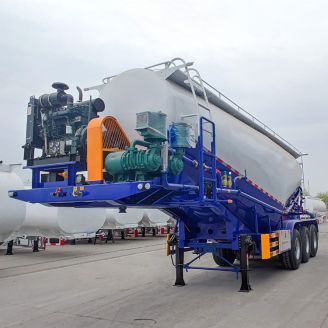
The core competitive advantage of TITAN cement bulker trailers lies in the mature and efficient pneumatic air pressure conveying system, which realizes fully automatic unmanned unloading. The trailer is equipped with a high-power industrial-grade air compressor with stable air output and strong pressure resistance. During operation, the air compressor continuously delivers stable and high-pressure compressed air to the uniform air chamber at the bottom of the sealed tank.
The flowing airflow forms a uniform fluidization layer on the tank bed. The stacked solid powder materials are gradually liquefied under the action of uniform air pressure, turning static solid powder into flowing fluid state. Relying on the internal and external air pressure difference of the tank body, the fluidized powder is quickly and continuously discharged to the designated silo or storage equipment through the special conveying pipeline. The whole unloading process requires no manual auxiliary operation, effectively shortening the cargo unloading cycle, improving the vehicle turnover rate, and greatly optimizing the overall logistics operation efficiency.
2.3 Structural Advantages & Key Features
In terms of structural design, TITAN dry bulk trailers adopt industry-optimized V-type and W-type streamlined tank body structures. The integral inclined tank design completely eliminates internal dead corners and material accumulation areas, ensuring that powdery materials slide down and discharge smoothly by gravity and air pressure. The cargo residual rate is strictly controlled below 0.3%, which maximizes the utilization rate of each batch of materials and avoids long-term economic losses caused by material residue and waste.
The entire tank body is made of high-strength wear-resistant steel plates, with overall reinforcement and professional anti-wear and anti-corrosion treatment. It can resist long-term friction, impact and abrasion of hard powder particles, effectively preventing tank wall thinning, deformation and damage during long-term high-frequency operation. Adopting full-automatic seamless welding technology, the tank body has excellent overall air tightness and structural stability, completely avoiding dust leakage during transportation, and fully meeting the strict environmental protection operation requirements of modern construction sites and industrial parks.
2.4 Standard Capacity Specification
The standard effective volume range of TITAN dry bulk tanker trailers is 25m³ to 60m³, covering small, medium and large-scale bulk material transportation demands. To adapt to diverse global transportation scenarios, we support personalized customized adjustments according to customer actual demands. Combined with different material density, long-distance transportation conditions and local road load limit standards, we can flexibly optimize the tank wall thickness, air pump power matching, tank body inclination angle and internal pipeline layout. This customized design ensures fast feeding and thorough discharging of different powdery materials, maintaining stable and efficient operation in various complex working conditions.
3. Asphalt & Bitumen Tanker Trailers
3.1 Overview & Industry Application
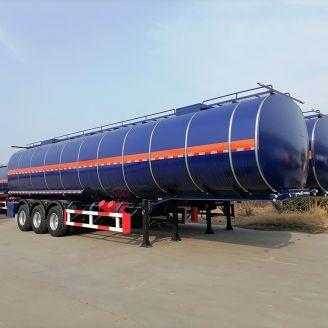
Asphalt and bitumen tanker trailers are professional constant-temperature heat-preserved transport equipment specially designed for high-viscosity thermal industrial materials. Different from conventional liquid cargo, asphalt, modified bitumen and coal tar have special physical properties: they maintain fluidity only at high temperature, and will gradually thicken, condense and completely solidify at normal temperature. Ordinary standard tankers cannot solve the problem of material solidification, which will lead to unloadable cargo and overall material scrapping, causing huge economic losses.
TITAN heat-preserved asphalt tankers are professionally developed for road engineering and municipal infrastructure projects, widely used in highway construction, bridge pavement, urban road renovation, daily highway maintenance and large-scale water conservancy engineering construction. They are mainly responsible for the long-distance transportation and short-distance turnover of liquid asphalt, modified bitumen, coal tar and heavy industrial oil, ensuring that the thermal materials maintain stable fluidity from factory delivery to on-site construction, and guaranteeing uninterrupted progress of engineering projects.
3.2 Thermal Insulation Structural Design
To solve the core industry problem of heat loss and cargo solidification during long-distance transportation and on-site standby, TITAN asphalt tankers adopt a multi-layer composite thermal insulation structure. The interlayer of the tank body is filled with high-density rock wool and fiberglass thermal insulation materials with ultra-low thermal conductivity. These high-performance thermal insulation fillers can effectively isolate external cold air and temperature changes, greatly reducing internal heat loss and slowing down the cooling and solidification speed of asphalt materials.
The outer layer of the thermal insulation structure is covered with thickened stainless steel protective cladding, which integrates waterproof, anti-corrosion, wear-resistant and anti-aging functions. This integrated protective structure can stably lock the internal temperature for a long time. Even in severe cold winter environments, long-distance cross-city transportation and long-time on-site standby scenarios, it can effectively prevent asphalt condensation and solidification, ensuring that the cargo always meets construction fluidity standards.
3.3 Heating System & Core Functional Features
All TITAN asphalt tanker trailers are equipped with independent diesel burners and full-coverage circulating heating pipeline systems, serving as a supplementary guarantee for material fluidity. When the ambient temperature is too low or the transportation time is too long, resulting in decreased cargo temperature and thickened asphalt viscosity, the independent heating device can be started for rapid circulating heating.
The heating pipelines fully cover the bottom and inner wall of the tank body, realizing uniform and balanced overall temperature rise without local overheating or material deterioration. This efficient heating design can quickly restore the fluidity of slightly solidified asphalt, achieve thorough and clean discharging without residue, and completely avoid material waste and pipeline blockage. The matched heating system has the advantages of low fuel consumption, high thermal efficiency and stable operation, perfectly adapting to long-distance cross-regional transportation and intermittent construction operation modes.
3.4 Standard Transport Capacity
The conventional effective capacity of TITAN asphalt and bitumen tanker semi trailers ranges from 30,000L to 50,000L, covering the mainstream cargo volume demands of road engineering projects. The overall vehicle structure is scientifically optimized for weight distribution, with a low center of gravity and stable driving performance. It can adapt to various complex road conditions including bumpy construction access roads, mountain winding roads and long-distance high-speed highways, fully meeting the high-frequency turnover and continuous material supply demands of large-scale infrastructure projects.
4. Acid & Chemical Tanker Trailers
4.1 Overview & Hazardous Cargo Adaptability
Chemical and acid tanker semi trailers are professional high-spec transport equipment engineered exclusively for corrosive, toxic, and environmentally hazardous liquid cargo. Unlike ordinary fuel or water tankers constructed with standard carbon steel or aluminum alloy, conventional trailer materials cannot withstand strong chemical erosion. When used for industrial acid and alkali liquid transportation, ordinary tanks are highly prone to internal oxidation, wall perforation, liquid leakage, and even serious safety and environmental accidents.
TITAN chemical tanker trailers are manufactured in full compliance with international dangerous goods transportation regulations and industry safety standards. They are professionally adapted for the safe haulage of high-risk liquids, including sulfuric acid, hydrochloric acid, nitric acid, caustic soda, industrial chemical solvents, and other highly corrosive industrial fluids. Widely deployed in chemical factory raw material distribution, pharmaceutical industrial liquid logistics, industrial park material turnover, and professional hazardous cargo transportation, these tankers provide stable, compliant, and risk-free transport solutions for high-standard industrial logistics scenarios.
4.2 Professional Anti-Corrosion Material Configuration
To adapt to different levels of chemical corrosion and meet customers’ diverse budget and usage demands, TITAN provides two mature, field-verified anti-corrosion material solutions.
The first option is 316L high-grade stainless steel tank bodies. This premium material features outstanding acid and alkali resistance, high-temperature durability, and anti-oxidation performance. It avoids chemical reaction with high-purity and strong corrosive liquids, ensuring zero cargo contamination and long-term structural stability. It is the ideal configuration for long-distance, high-frequency transportation of high-risk chemical materials.
The second cost-effective solution is PE-lined carbon steel tanks. By spraying and forming a dense, thick polyethylene anti-corrosion lining inside standard carbon steel tanks, the trailer completely isolates direct contact between the metal body and corrosive liquid. While maintaining high structural strength, this design greatly reduces manufacturing costs and delivers excellent cost performance for medium-corrosion chemical cargo transportation scenarios.
4.3 Safety Protection System & Core Features
Safety design runs through the entire structure of TITAN chemical tankers. Adopting fully sealed integral tank forming and standardized top-discharge pipeline layout, the trailer is equipped with complete multi-stage safety configurations, including emergency cut-off valves, anti-explosion pressure relief devices, multi-stage filter systems, and reinforced anti-spill protective structures.
In extreme scenarios such as vehicle collisions, sharp turns, or emergency braking, the automatic emergency cut-off system can instantly close the liquid pipeline to prevent hazardous liquid overflow and leakage. This effectively avoids road pollution, chemical residue hazards, and personal safety accidents. All sealing gaskets, pipeline joints, and valve components are made of special anti-corrosion, aging-resistant, and high-pressure resistant materials, ensuring permanent tight sealing performance and zero liquid leakage during long-term operation.
4.4 Standard Capacity Range & Compliance Performance
TITAN acid and chemical tanker semi trailers cover a standard effective capacity from 20,000L to 45,000L. We support personalized volume adjustment and structural optimization according to local road limits and cargo attributes.
Every finished chemical tanker undergoes strict factory-level tests, including hydraulic pressure resistance testing, full air tightness detection, and anti-corrosion layer durability inspection. All trailers fully comply with global hazardous goods transportation certification standards, ensuring legal, safe, and reliable operation in different countries and regions worldwide.
5. Why Choose TITAN Tanker Trailers?
5.1 High-Precision Automated Manufacturing
At TITAN Vehicle, we invest heavily in modern production lines to guarantee consistent build quality for every tanker semi trailer. Our manufacturing workflow integrates laser precision cutting, heavy-duty mechanical bending forming, and automatic submerged arc welding. Laser cutting delivers clean, dimensionally accurate steel plates with minimal material distortion, laying a solid foundation for tank assembly. Submerged arc welding creates continuous, uniform and dense weld seams, free of blowholes, gaps or incomplete fusion.
The whole tank and chassis structure is engineered for balanced stress distribution. This robust construction withstands repeated structural fatigue and deformation brought by long-distance heavy haulage, rough unpaved roads, frequent loading and unloading cycles. Whether operating on smooth highways or bumpy site access roads, our tankers maintain structural integrity and long-term durability, lowering your fleet’s repair frequency and downtime.
5.2 Strict Full-Process Safety Testing
Safety is the top priority for tanker production, especially for tankers carrying flammable, powdery or corrosive hazardous cargo. Every TITAN tanker trailer undergoes a complete 100% full-item factory inspection before shipment, no exceptions. The test suite includes hydraulic pressure resistance testing, air tightness leak detection, and X-ray non-destructive weld flaw inspection.
Hydrostatic pressure tests verify that the tank body can safely sustain rated working pressure, while air tightness checks spot even micro leaks. X-ray scanning inspects the internal quality of welds that cannot be seen visually. Any tiny defects or hidden risks will be fixed before delivery. This rigorous testing regime ensures all trailers comply with international hazardous goods transport standards, giving fleet operators reliable equipment for safe and stable long-term operation.
5.3 Global Customized Adaptation Service
Road transport regulations vary greatly across different countries and regions, including axle load limits, overall dimension restrictions and local certification requirements. We provide tailored tanker configuration services to match your local road rules and unique operational scenarios.
Our customization scope covers axle quantity selection, mechanical suspension or air suspension options, tank volume adjustment, internal compartment layout, tank inner lining design, exterior paint color & anti-rust coating, plus all kinds of safety accessories such as emergency valves, manholes and discharge pipelines. We listen carefully to your cargo type, transport routes and daily working conditions, then design exclusive tanker solutions to fit your business perfectly, no matter which market you operate in.
6. Frequently Asked Questions (FAQ)
Q1 (Fuel Tanker): Can fuel tanker semi trailers be built with multiple compartments?
A: Yes. TITAN fuel tankers support multi-compartment design. Separate cabins allow you to transport different oil products such as gasoline and diesel in one trailer without cross-contamination. We customize compartment quantity and volume according to your local transport rules and delivery needs for multi-product oil distribution.
Q2 (Powder & Cement Bulker): What residual rate can I expect on a cement bulker trailer after unloading?
A: Our optimized V-type or W-type tank structure controls the material residual rate below 0.3%. With matched high-power air compressor and fluidization bed, most cement, fly ash and mineral powder can be discharged thoroughly, cutting material waste and improving your cargo utilization.
Q3 (Asphalt & Bitumen Tanker): How long can the asphalt tanker keep bitumen at working temperature during transit?
A: Thanks to our multi-layer rock wool/fiberglass insulation plus stainless steel outer cladding, the tanker maintains asphalt fluidity for long-distance transport and site standby. If temperature drops, the built-in diesel circulating heating system can reheat the bitumen to restore flowability for complete unloading.
Q4 (Acid & Chemical Tanker): Which material option is better for medium corrosive chemical liquid, 316L stainless steel or PE-lined carbon steel?
A: PE-lined carbon steel is the cost-effective choice for medium-corrosion liquids such as dilute acid and alkali solutions. For strong corrosive or high-purity chemicals, we recommend 316L stainless steel tanks, which deliver superior anti-corrosion performance and avoid cargo contamination.
Q5 (General): What information should I prepare to place an order for TITAN tanker trailers?
A: Please provide cargo type, cargo density or viscosity, required tank volume, local axle load & dimension limits, typical road conditions, plus preferred axle quantity and suspension type. With these details, our engineering team can design a compliant, customized tanker solution for you.
Shandong TITAN Vehicle Co., Ltd.
Wehcat/Whatsapp: +86 18660159635
Tel.: +86531-88997626

BOSS WeChat

Boss Whatsapp