
Since 2014
Ten Years of Reliability Your Trusted Partner
Ten Years of Reliability Your Trusted Partner
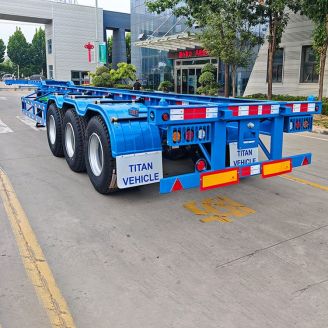
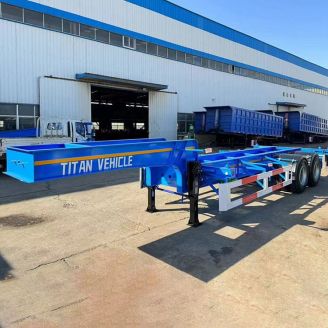
The global freight and intermodal shipping industry relies heavily on semi-trailers to move goods from ports, warehouses, construction sites and industrial zones to end destinations. Intermodal freight transport forms the backbone of global logistics and port haulage. Semi trailers are essential equipment for moving containers, bulk goods and heavy machinery across inland routes and coastal terminals.
When fleet owners look for reliable semi trailer upgrades, two options stand out the most. These are the versatile flatbed semi trailer and the professional container chassis trailer. Many buyers struggle to choose between them. At first glance, both models can carry standard ISO shipping containers. This similarity makes many new logistics operators assume they are interchangeable.
However, their structural design, load capacity, application scope, maintenance cost, tare weight and long-term operating profit are vastly different. A poor trailer choice will result in low equipment utilization, increased fuel costs and wasted investment. It will also limit your business expansion in long-term freight operations.
This guide will break down flatbed trailers and container chassis one by one, explain their core structures, suitable cargo types, strengths and weaknesses. It will compare their key differences, answer common technical questions, and share practical selection advice for fleet managers. Whether you run a small local logistics team or a large port haulage company, you can learn whether a flatbed trailer or container chassis fits your daily freight tasks.
A flatbed semi trailer for sale is a highly practical, multi-purpose semi-trailer that serves as core equipment for general freight, project cargo and heavy-duty haulage across global logistics industries. Built with a full solid steel deck and designed without side walls or roof coverings, it features a completely open loading platform with ultra-high structural stability and load-bearing performance.
Thanks to its open structural design, a flat bed trailer supports omnidirectional loading and unloading from the top, side and rear of the trailer. This flexible operation mode solves the loading limitations of enclosed box trailers and hollow frame-only trailers. It delivers stronger scene adaptability and higher cargo compatibility for complex logistics tasks.
For most mixed-operation logistics enterprises and small-to-medium fleets, investing in a reliable flatbed semi trailer is a cost-effective long-term solution. Capable of supporting diversified cargo transportation demands, it effectively reduces vehicle idle time, improves overall fleet utilization and stabilizes daily operating revenue.
2.1 Common Cargo Types for Flatbed Trailers
As a universal transport tool, the flatbed trailer for sale supports nearly all conventional and special freight types in modern logistics. Its compatible cargo categories are classified in detail below:
- Standard Shipping Cargo: Perfect for transporting 20ft, 40ft and other standard ISO shipping containers, covering mainstream intermodal container transportation needs for port and inland haulage.
- Steel & Industrial Materials: Suitable for steel coils, large steel structures, industrial profiles, steel pipes and other heavy industrial materials that require flat and stable bearing surfaces.
- Construction & Building Materials: Capable of hauling various construction materials, including precast components, cement parts, profiles and bulk building supplies for engineering projects.
- Agricultural & Engineering Equipment: Adaptable to large agricultural machinery, construction excavators, loaders and other heavy engineering equipment with irregular shapes.
- Oversized & Special Cargo: Ideal for oversized, ultra-long or irregular freight that cannot be loaded in enclosed trailers, solving special transportation demands for project logistics.
- Timber & Bulk Goods: Stably transports timber, wood materials and palletized bulk cargo, realizing flexible loading and stable fixing operations.
2.2 Common Cargo Types for Flatbed Trailers
As a universal transport tool, the flatbed trailer for sale supports nearly all conventional and special freight types in modern logistics. Its compatible cargo categories are classified in detail below:
- Standard Shipping Cargo: Perfect for transporting 20ft, 40ft and other standard ISO shipping containers, covering mainstream intermodal container transportation needs for port and inland haulage.
- Steel & Industrial Materials: Suitable for steel coils, large steel structures, industrial profiles, steel pipes and other heavy industrial materials that require flat and stable bearing surfaces.
- Construction & Building Materials: Capable of hauling various construction materials, including precast components, cement parts, profiles and bulk building supplies for engineering projects.
- Agricultural & Engineering Equipment: Adaptable to large agricultural machinery, construction excavators, loaders and other heavy engineering equipment with irregular shapes.
- Oversized & Special Cargo: Ideal for oversized, ultra-long or irregular freight that cannot be loaded in enclosed trailers, solving special transportation demands for project logistics.
- Timber & Bulk Goods: Stably transports timber, wood materials and palletized bulk cargo, realizing flexible loading and stable fixing operations.
2.3 Core Advantages of Flatbed Semi Trailer
The flatbed trailer for sale boasts outstanding comprehensive advantages that make it a favorite for mixed-logistics fleets. Its core strengths are summarized below:
- Powerful Versatility: A single flatbed semi trailer can handle multiple types of transportation tasks. It is compatible with standard container haulage, general bulk cargo delivery, palletized goods transport, as well as heavy machinery and oversized project cargo delivery. It covers almost all conventional logistics scenarios that single-function trailers cannot support.
- High Fleet Utilization Rate: Unlike dedicated container trailers with single usage, the flat bed trailer is not limited to container orders. When container business is slow or seasonal, it can freely switch to other freight tasks, effectively avoiding long-term equipment idle time.
- Strong Business Anti-Risk Ability: It helps logistics companies balance order fluctuations and stabilize operating income. For small and medium-sized fleets with unstable order types, this multi-functional feature greatly reduces investment risks and improves long-term return on investment.
2.4 Main Limitations
Although flatbed trailers dominate mixed freight transportation with powerful versatility, they still have inherent structural and operational limitations compared with professional skeletal trailer for sale. The main disadvantages are listed as follows:
- Heavier Tare Weight: The full solid steel deck structure requires more manufacturing materials, making the overall tare weight much heavier than a standard skeleton trailer under the same axle configuration and overall length. The integrated deck design sacrifices lightweight performance for structural versatility.
- Reduced Legal Payload: Due to its heavier self-weight, the flatbed trailer’s available legal payload is slightly limited under local road weight regulations. In strict weight-limited areas, fleet operators cannot maximize cargo tonnage compared with lightweight container chassis trailers.
A container chassis trailer, widely referred to as a skeleton trailer, is a professional single-purpose semi-trailer specially engineered for intermodal container transportation. Unlike universal flatbed units, it abandons the traditional full steel deck design and adopts a hollow, high-strength reinforced frame structure focused entirely on container bearing and fixing.
Every beam layout, stress point and installation position of the skeleton trailer is strictly manufactured in accordance with ISO international container standards. It provides precise, stable and concentrated bearing capacity for standard shipping containers, making it professional dedicated equipment for high-frequency container turnover at ports, terminals and inland freight hubs.
For fleet operators whose core business focuses on pure container haulage, searching for a reliable skeleton trailer for sale is an effective way to reduce long-term operating costs, improve transport efficiency and standardize fleet management.
3.1 Main Application Scenarios of Skeletal Trailer
The container chassis trailer is designed for standardized, high-efficiency container logistics. It adapts to high-intensity, repetitive transport scenarios that require fast loading, stable fixing and rapid turnover. Its mainstream application scenarios are detailed below:
- Port Container Shuttle: Perfect for short-distance cyclic transfer of containers between berths, container yards and terminal storage areas. It supports high-intensity daily operation and fast container turnover, fully matching the fast-paced working rhythm of port terminals.
- Terminal Sorting & Distribution: Suitable for internal container sorting, stacking transfer, temporary storage and yard arrangement. It helps terminal operators realize standardized container management and improve overall terminal operation efficiency.
- Inland Container Haulage: Widely used for fixed-line container transportation from coastal ports to inland depots, urban warehouses, logistics parks and industrial zones. It stably undertakes mainstream inland intermodal container distribution tasks.
- Cross-City Intermodal Transit: Ideal for long-distance cross-city container transportation with stable cargo volume and fixed routes. It provides lightweight, low-consumption and high-efficiency container delivery solutions for professional logistics companies.
- Higher Long-Term Fuel Consumption: The extra body weight brings greater driving resistance during long-distance continuous haulage. Flat bed trailers consume marginally more fuel on full-load routes, resulting in slightly higher daily operating costs for pure container transportation tasks.
- Higher Deck Wear and Maintenance Pressure: Frequent loading of sharp steel materials, heavy machinery and irregular cargo will cause gradual wear, scratches and deformation on the steel deck. Regular deck inspection, anti-rust treatment and partial repair work are required to maintain long-term service life.
3.2 Structural Features of Skeletal Trailer
Different from the full-area bearing design of flatbed trailers, the skeletal trailer for sale adopts a specialized hollow frame structure, which is completely optimized for standard container bearing characteristics. Its core structural advantages are reflected in the following aspects:
- Standardized Twist Lock Positioning: Equipped with factory pre-installed high-precision fixed twist locks. The lock spacing and height strictly match the corner casting size of ISO standard containers. It realizes accurate positioning, firm locking and anti-slip fixation during container transportation, avoiding container displacement and shaking.
- Lightweight Hollow Frame Design: Eliminating the heavy full steel deck, the trailer only retains high-strength reinforced main beams and auxiliary support structures. This scientific design greatly reduces the overall tare weight, realizing lightweight transportation and creating more payload space for container cargo.
- Targeted Force-Bearing Structure: The frame reinforcement structure is precisely distributed aiming at the four corner stress points of containers. It concentrates the bearing force on the effective stress area of the container, ensuring stable bearing without redundant structural load, improving force transmission efficiency and extending frame service life.
- High Universal Compatibility: The overall frame length, beam spacing and twist lock layout are compatible with 20ft and 40ft standard shipping containers. It meets unified international intermodal transportation standards and adapts to most port and inland container transport scenarios worldwide.
3.3 Core Advantages of Skeletal Trailer
As professional dedicated container transport equipment, the container chassis trailer shows irreplaceable comprehensive advantages in standardized container logistics scenarios. Its core strengths for fleet operation are summarized as follows:
- Low Fuel Consumption & Lower Operating Cost: Benefiting from ultra-light tare weight, the skeleton trailer produces smaller driving resistance during long-distance running. For fleets engaged in long-term and repeated container route operations, it can effectively reduce daily fuel consumption and significantly lower long-term comprehensive operating expenditure.
- High Terminal Operation Efficiency: The fixed standard twist lock positions realize one-step positioning and locking of containers. It simplifies loading and fixing procedures, shortens single-container operation time, improves vehicle turnover frequency, and greatly boosts overall terminal operation efficiency.
- Maximized Legal Payload Capacity: Under the same national road weight limit regulations, the lightweight structure reserves larger effective payload. Fleet operators can carry more container cargo per single trip, effectively improving single-vehicle transport revenue and economic benefits.
- Stable Structure & Low Maintenance Rate: The frame structure is simple, clear and highly targeted, with fewer vulnerable accessories. It features stable operation, low failure rate and convenient daily inspection and maintenance. It is very suitable for high-frequency, long-term continuous fleet operation.
3.4 Main Limitations
While the container chassis trailer excels in professional container transport scenarios, its high specialization also brings obvious functional limitations compared with versatile flatbed trailers. The main usage drawbacks are listed below:
- Single Cargo Adaptability: Due to its hollow frame structure with no full deck support, the container chassis trailer can only carry standard ISO shipping containers. It cannot load bulk goods, palletized cargo, steel pipes, timber, engineering machinery and other general freight, with extremely single cargo applicability.
- Low Comprehensive Fleet Utilization: The equipment completely relies on container business orders. During the off-season of container logistics or when container orders are insufficient, the skeleton trailer cannot switch to other freight tasks, resulting in long-term idle equipment and wasted fleet resources.
- Limited Business Flexibility & Expansion: It cannot adapt to mixed logistics operation modes. It is unable to undertake oversized cargo, special-shaped equipment and diversified general freight orders, greatly limiting the business expansion capability of logistics fleets.
- Strict Loading & Usage Limitations: Loading non-container cargo will cause serious uneven frame stress, resulting in cargo sliding, frame torsion and structural deformation. It brings major potential safety hazards to driving and cannot meet diversified daily freight needs.
Flatbed trailers and container chassis trailers are both widely used in intermodal logistics, yet they differ fundamentally in design philosophy, functional positioning, structural mechanics and operational economy. The core gap boils down to versatile multi-scenario adaptability (flatbed trailer) versus professional single-scenario specialization (container chassis trailer). Understanding these key differences helps fleet owners avoid wrong purchases and match trailers to their actual business model.
4.1 Functional Positioning Difference
The two trailer types have completely different market positioning and business orientations, which determines their applicable customer groups:
- Flatbed Semi Trailer: It is defined as a multi-functional comprehensive transport platform. It perfectly combines container haulage and general freight transportation. With flexible configuration and strong compatibility, it can switch freely between standard containers, steel materials, construction equipment, oversized cargo and bulk goods. It is built for mixed-operation fleets with diverse order types.
- Container Chassis Trailer: It is a single-purpose professional logistics equipment purely optimized for intermodal container transportation. It abandons redundant general cargo functions and focuses entirely on improving container fixing accuracy, transportation stability and turnover efficiency. It is designed exclusively for standardized, high-frequency container port and inland haulage scenarios.
4.2 Structure and Bearing Difference
Structural design is the essential physical difference between the two trailers, directly affecting cargo bearing mode and loading flexibility:
- Flat Bed Trailer Structure: Equipped with a complete integral solid steel deck, it forms a full-plane continuous bearing surface. The uniform stress design supports all-round force bearing for various cargo shapes and weights. It allows flexible loading from side, rear and top directions, adapting to irregular cargo, heavy machinery and scattered bulk goods that require overall flat support.
- Skeleton Trailer Structure: Adopts a hollow frame structure without full deck pavement. It only retains reinforced support beams corresponding to the four corner castings of standard containers. It only provides concentrated point support for container corners. It cannot form continuous bearing surfaces, so it is unable to carry scattered, palletized or irregular general cargo safely and stably.
4.3 Operating Cost and Efficiency Difference
The structural gap further leads to obvious differences in fuel consumption, payload performance and comprehensive economic benefits in actual operation:
- Pure Container Transport Scenarios: The skeletal trailer for sale has a lighter tare weight due to its hollow frame design. It produces lower driving resistance, effectively reducing daily fuel consumption. Meanwhile, the lightweight body retains larger legal payload within road weight limits, enabling higher single-vehicle cargo volume and lower unit transportation cost. For long-term fixed container routes, skeleton trailers deliver higher operational efficiency and better cost performance.
- Mixed Freight Operation Scenarios: Although flatbed trailers have slightly higher fuel consumption in single container transport, they have incomparable comprehensive advantages. They can make full use of idle time to undertake various general freight orders, greatly improving fleet utilization. The diversified revenue sources effectively offset the minor fuel cost disadvantage, bringing more stable and higher long-term comprehensive benefits for mixed-operation logistics fleets.
4.4 Flatbed Trailer vs Skeletal Trailer: Comparison Table
|
Comparison Item
|
Flatbed Trailer
|
Container Chassis / Skeleton Trailer
|
|
Deck Structure
|
Full solid steel flat deck
|
Hollow skeletal frame, no full deck
|
|
Applicable Cargo
|
Containers, machinery, steel, timber, oversized cargo
|
Only standard ISO shipping containers
|
|
Tare Weight
|
Heavier
|
Lighter
|
|
Fuel Consumption
|
Slightly higher
|
Lower for container haulage
|
|
Asset Utilization
|
High, multi-scenario use
|
Low, single-scenario use
|
|
Core Advantage
|
Strong versatility, anti-risk ability
|
Light weight, high container efficiency
|
5.1 Choose Flatbed Trailer If You:
Run mixed freight business with unstable single-type orders. Need to transport oversized machinery, construction materials and steel products frequently.
Want to maximize fleet utilization and reduce equipment idle rate. Manage small and medium fleets with diverse business needs.
If you are looking for a cost-effective flatbed trailer for sale, this multi-purpose model is your best long-term investment.
5.2 Choose Container Chassis Trailer If You:
Focus on pure container haulage with fixed port and inland routes. Pursue low fuel consumption and high daily transport volume.
Run professional logistics companies specializing in container terminal turnover. Need standardized equipment for large-scale fleet operation.
Searching for a skeletal trailer for sale to match dedicated container business will bring you higher comprehensive returns.
FAQ
1. Can I install twist locks on a flatbed semi trailer later?
Yes. Most standard flatbed trailers reserve installation positions. You can add or replace twist locks according to container transportation needs to realize container loading function.
2. Which trailer has lower long-term operating cost?
For full-time container transportation, the skeleton trailer has lower cost due to its light weight. For mixed business, the flatbed trailer for sale has better overall economic benefits.
3. Are container chassis trailers cheaper than flatbed trailers?
The unit price of a skeleton trailer is slightly lower. It uses less steel materials. But its single function limits business expansion, so it is not suitable for all fleet types.
4. What axle configurations are available for the two trailers?
Both flat bed trailer and container chassis trailer support 2-axle and 3-axle configurations. 3-axle models are more mainstream and meet most national road weight limit standards.
5. Can a Flatbed Trailer Carry Shipping Containers?
Yes. A standard flatbed trailer installed with qualified twist locks can safely carry 20ft, 40ft and other standard shipping containers.
Before container loading, operators need to check key parameters. These include container weight, container length, twist lock position and local road weight limits.
With reliable deck bearing and standard locking configuration, the flatbed trailer can fully meet daily container intermodal transportation needs.
6. Can a Container Chassis Trailer Carry General Cargo?
No. A standard skeleton trailer is not suitable for general bulk cargo, mechanical equipment, timber and palletized goods.
The hollow frame structure cannot provide continuous bearing and fixed points. Loading non-container goods will cause uneven stress and cargo sliding.
This situation will bring serious driving safety hazards. For mixed cargo transportation needs, a flatbed trailer is the only reasonable choice.
Shandong TITAN Vehicle Co., Ltd.
Wehcat/Whatsapp: +86 18660159635
Tel.: +86531-88997626

BOSS WeChat

Boss Whatsapp